Artist Biography
"from native grounds to mystic heights"
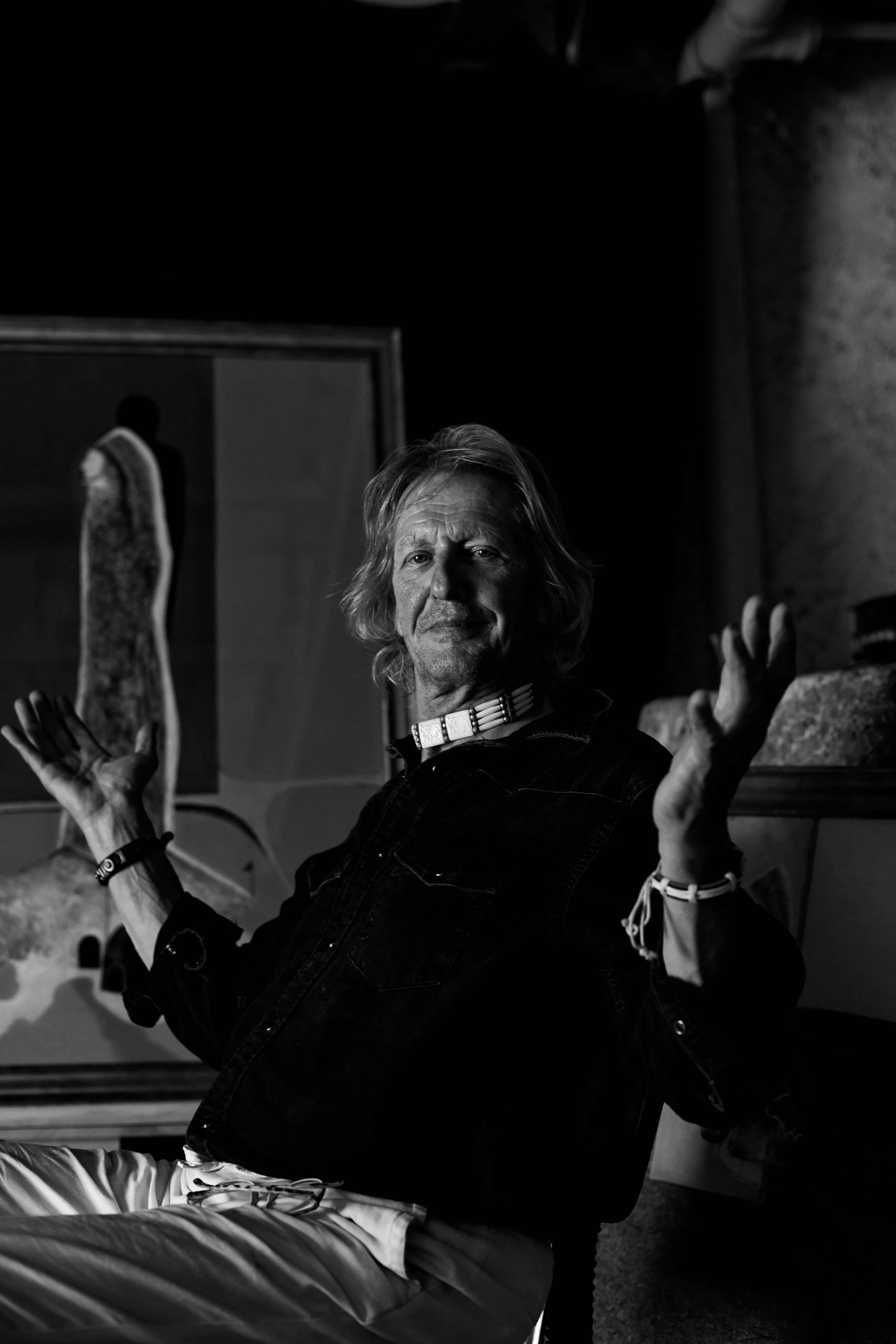
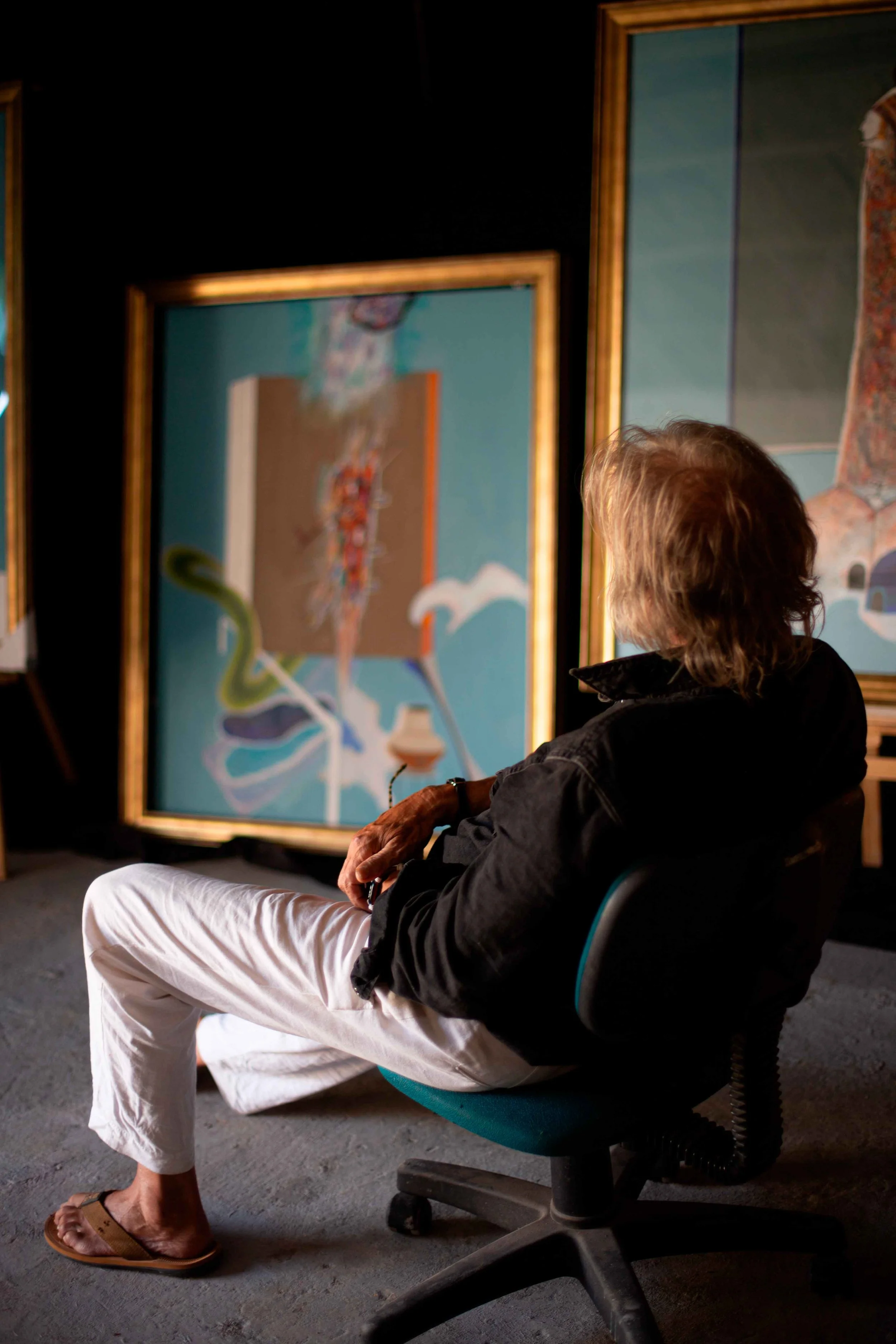
The artist "Hands" Maal (born October 1949) is a Dutch-born symbolic-figurative painter, known for his native-inspired, characteristic, and warm colour palette.
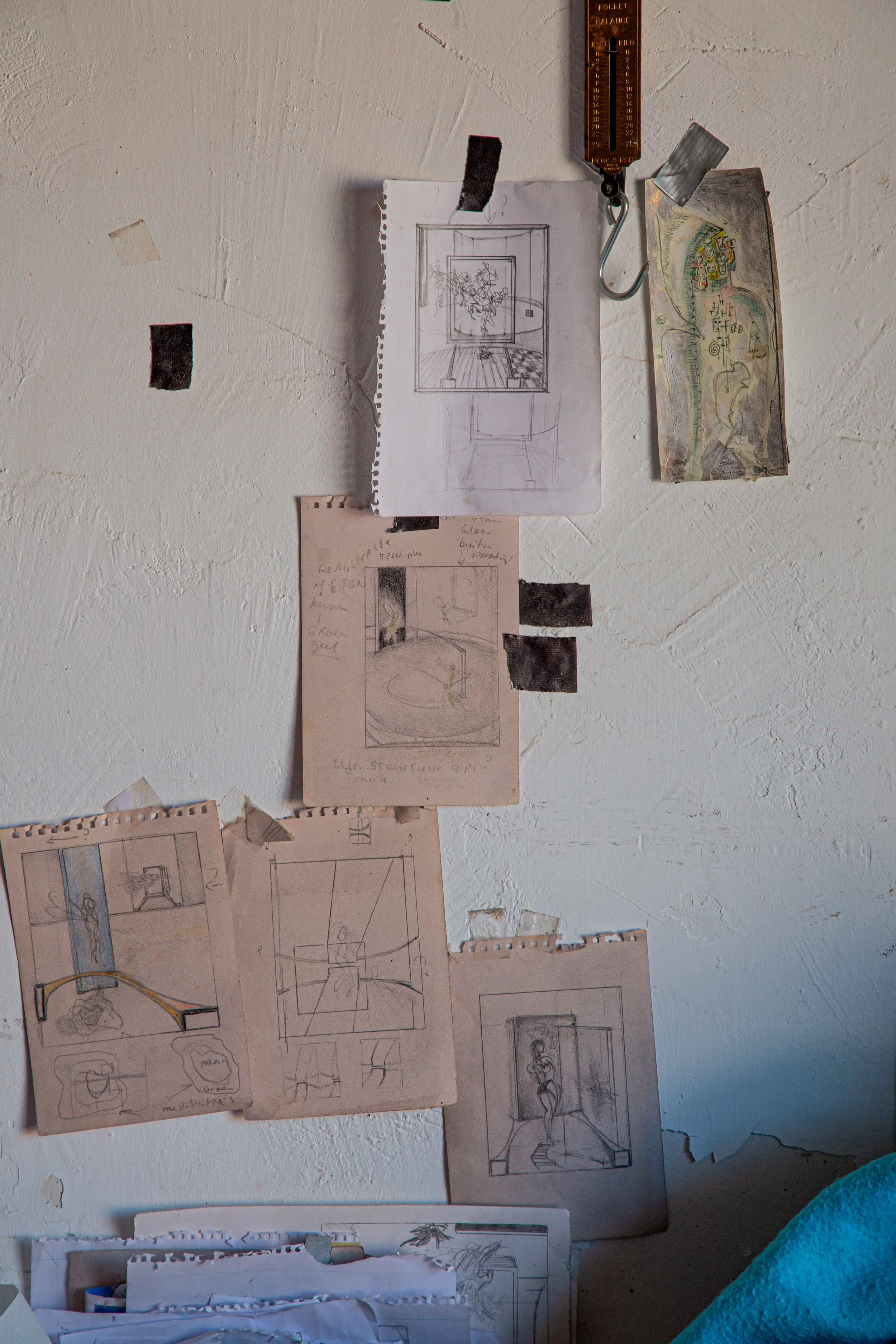
He works with a lot of relief and texture, partly abstract and partly in combination with symbolic and mystical forms in large formats.
Background
The artist grew up in the Netherlands but also has French and German blood.
In his youth, Maal was a rebellious individual, always in search of beauty and freedom.
He began working as a photographer in the 1970s and briefly studied drawing and architecture at the Royal Academy in The Hague.
In the 1970s-1980s, the artist chose to pursue painting freely, even though he was aware it could lead to an uncertain financial situation.
However, he found it more important at the time to follow his heart, which much later proved to be successful.
In addition to his work, he also strived for further spiritual development. Consequently, he decided to go to America for a short time in 1981. There, he encountered the original Native Americans, the "Lakota," who continued to inspire him in his work long after.
After the sensitive artist had stayed in The Hague for a while upon his return, he decided, on the advice of a good friend who was also an art historian, to return to America for a longer period.
Incidentally, artistry was not unfamiliar to Maal: his grandfather worked as a painter at Montmartre in Paris in the 1940s and 50s.
Hands Maal also had regular contact with art historian R. Bolleurs, who critically followed Maal's work for about eight years.
The years 1980-1985, works and exhibitions
In 1980, following an international peace discussion, the artist created four identical photographic artworks named "The Presidents Chair," which he sent to four heads of state: President Anwar El-Sadat of Egypt, President Jimmy Carter of the USA, Prime Minister Menachem Begin of Israel, and Queen Beatrix of the Netherlands.
All of them sent the artist a personal letter of thanks with words of praise.
In 1982, Maal participated in a photo exhibition in Japan, "The Salon Sabuki" in Tokyo.
From many other photographic submissions, his work "Navajo Men" was selected to be exhibited in Tokyo.
In various European countries, several of Maal's works have been exhibited and sold in various galleries and exhibitions.
Paintings by his hand have also been sold in Canada and South Dakota.
In 1984, articles about artworks by both native artists working from Canada and artists working from Europe, including contemporary modern art by Hands Maal, were published in The Hague magazine "De Ronde Tafel."
Images of Maal's artworks also appeared in the magazine "Avant Garde" in Belgium and the Netherlands, which brought his art further attention.
Furthermore, the photographic artwork "The Presidents Chair" was exhibited in the present-day Kurhaus. The exhibition was opened by a member of the Dutch House of Representatives.
Many private individuals, including friends and acquaintances, are in possession of works by Hands Maal. Paintings by his hand have been sold in 11 countries, mostly to private individuals.
Spain
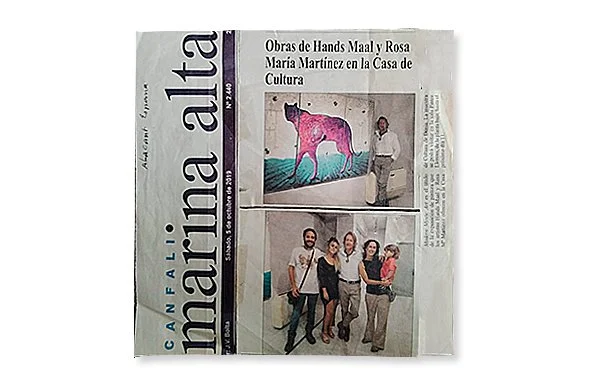
The artist now lives and works in Alicante, Spain. He has a large collection of paintings, which he regularly exhibits for sale.
In addition to paintings, the artist also writes poems, about which he says they convey a spiritual or mystical message, just like his paintings.
But it is up to the reader/viewer to be willing/able to read/see the message.
The work the artist currently creates in Spain is not only an explosion of colour but also represents a deep, spiritual journey. He is known for his ability to capture both the visible and the invisible in his work.
His canvases are windows into worlds that reflect the rich traditions of the Dakota Indians and the artist's search for new inspirations.
With each painting, Maal creates not only an expression of respect but also a connection with all of us.
Hands-Slow Maal
mita-kuye-oyasin
Note: "mita-kuye-oyasin" is a Lakota phrase meaning "we are all related."
"from native grounds to mystic heights"
"from native grounds to mystic heights"
mita-kuye-oyasin" is a Lakota phrase meaning "we are all related.".